
↑
Back to Top
What are the key benefits and essential features of Kaspersky Safe Kids?
Web Filtering – Blocks inappropriate sites across browsers and apps.
Screen Limits – Sets daily schedules to reduce device overuse.
App Control – Manages app usage and blocks risky installs.
Location Alerts – Tracks GPS location with safe-zone notifications.
YouTube Monitoring – Enforces Safe Search and reviews watch history.
Proactive Security – Continuous updates keep monitoring reliable and always active.
Download: Kaspersky Safe Kids

Web filtering – Blocks adult and unwanted site categories per child.
App control – Allows, blocks, or restricts individual apps and games.
Screen time – Sets daily usage limits and time schedules.
GPS location – Maps current position with geofenced safe-area alerts.
Important – Antivirus, VPN, password manager, and firewall are not included.
Core Capacity – Covers Windows, macOS, Android, and iOS devices.
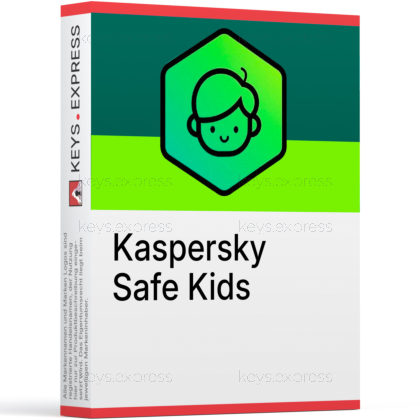
Kaspersky Safe Kids is a standalone parental control app that filters content, limits screen time, manages apps, and tracks a child's location across devices. It is not a security suite, so it adds child-safety controls on top of whatever antivirus you already run.
One dashboard – Manage every child profile from My Kaspersky.
Cross-platform – Same rules apply on phones, tablets, and PCs.
Unlimited devices – Add as many child devices as needed.
Tamper resistance – Removal on the child device needs a parent code.
Talking points – Built-in advice for discussing the rules with kids.
Free tier – Core filtering and time limits cost nothing to start.
Kaspersky Safe Kids restricts what a child can see and do online and reports their activity to a parent dashboard. You assign each child a profile with a birth year, then set web categories to Allowed, Warning, or Forbidden, cap daily device time, and decide which apps run. On Windows it ties profiles to individual Windows user accounts, so an adult sharing the same PC is unaffected. In independent AV-Comparatives testing the Windows web filter held up across Chrome, Firefox, Edge, and Opera, including private-browsing windows. It does not scan for malware, so it works alongside your antivirus rather than replacing it.
The free version covers web content filtering, app usage controls, daily device-time limits, and YouTube Safe Search for an unlimited period. Premium adds the location and time-precision tools most parents want: GPS tracking on a map, geofenced safe areas, battery-level monitoring, day-by-day scheduling, YouTube search history, and real-time alerts. Both tiers monitor an unlimited number of child devices, which is unusual at this price point. The table below shows exactly which capabilities sit behind the paid tier.
| Feature | Free | Premium |
|---|---|---|
| Web content filtering | ✓ | ✓ |
| App usage control | ✓ | ✓ |
| Daily time limits | ✓ | ✓ |
| YouTube Safe Search | ✓ | ✓ |
| Time scheduling | ✕ | ✓ |
| GPS location and geofencing | ✕ | ✓ |
| Battery monitoring | ✕ | ✓ |
| YouTube search history | ✕ | ✓ |
| Real-time alerts | ✕ | ✓ |
It fits parents who run a mixed-device household and already have antivirus, but lack a single tool to set the same rules everywhere. Because one license covers unlimited Windows, macOS, Android, and iOS devices, a parent with three children on different platforms can apply identical web categories and time limits without buying per-device licenses. The Windows profile-to-account mapping also suits a shared family PC, since adults keep full access while a child's login stays restricted. Households whose children rely mainly on iPhones should weigh the iOS limits described below before choosing it.
On iOS, app filtering, time limits, scheduling, and app management are noticeably more limited than on Android or Windows because Apple restricts what third-party apps may control. Location tracking shows only the child's current position; there is no movement history for the day, and the minimum geofence radius is roughly 0.44 miles, so very small safe zones are not possible. Social media monitoring is now narrow in scope and the parent mobile apps do not surface a child's full web activity, so the web console gives the complete picture. There is also no YouTube channel whitelisting, only Safe Search and search-history logging. Knowing these gaps up front prevents buying it expecting full iPhone parity or detailed location trails.
No. Kaspersky Safe Kids is a dedicated parental control product and contains no antivirus engine, VPN, password manager, or firewall. Its job is content filtering, app and screen-time control, and location monitoring, so it runs alongside whatever security software protects the device against malware. If you want both child controls and full device protection, that is the role of Kaspersky's main consumer suites rather than Safe Kids. Treat this app as the family-rules layer, not the threat-protection layer.
Norton and Kaspersky compared
For a direct security-suite comparison, read our article:
It runs on Windows, macOS, Android, and iOS, all managed from the My Kaspersky web console. The Android and Windows builds offer the fullest control set, while iOS is more restricted due to Apple's platform rules. This breadth is the reason it suits homes where children mix phones, tablets, and computers.
Removing the app from the child's device requires a code from the parent dashboard, so a child cannot quietly delete it. On Windows, controls are tied to the child's Windows user account, which keeps an adult account on the same machine unrestricted. This makes it practical for a single shared family computer.
No. The free version keeps its core features—web filtering, app control, daily time limits, and YouTube Safe Search—for an unlimited period. A premium trial opens every feature temporarily, and when a premium subscription ends the app simply reverts to the free version rather than stopping. You can therefore test the full feature set before deciding whether the location and scheduling tools are worth the upgrade.
| Operating Systems | Windows 11 and 10: Home / Pro / Enterprise Windows 8.1 and 8: Pro / Enterprise Windows 7: Starter / Home Basic / Home Premium / Professional / Ultimate – SP1 or higher |
| Processor | 1 GHz or higher, x86 or x64. |
| Memory RAM | 1 GB for 32-bit or 2 GB for 64-bit. |
| Hard Disk | 200 MB free hard drive space. |
| Display | Screen resolution 1024 x 768 or higher. |
| Note | Additional free hard drive space up to 4.5 GB may be required to install Microsoft .NET Framework. Microsoft Windows Installer 3.0 or later required. Microsoft .NET Desktop Runtime 6.x, version 6.0.10 or higher, required. Internet connection required for My Kaspersky, application usage, and updates. |
| Operating Systems | From macOS 11 Big Sur to macOS 14 Sonoma. |
| Processor | Intel or Apple silicon. |
| Memory RAM | 2 GB. |
| Hard Disk | 550 MB free disk space. |
| Note | Requires internet connection for basic setup and My Kaspersky sign-in macOS 11 or later requires granting System extension, Full disk access, Network content filtering, and Encrypted web traffic inspection permissions for full functionality. Supported browsers: Safari 16.6 or later, Google Chrome 116.0 or later, Mozilla Firefox 116.0 or later. |
| Operating Systems |
From Android 11 to Android 16. |
| Display | Minimum screen resolution: 320 x 480. |
| Note | Smartphone or tablet required. Internet connection required. Install only in the device main memory. May be unstable if the device has a small amount of RAM. Incognito mode browsing is not monitored. |
| Operating Systems | iOS 26. iOS 18. |
| Note | Compatible with iPhone and iPad. Internet connection required. This indicates web protection on iOS is not system-wide and depends on using the Safe Kids browser. |