

↑
Back to Top
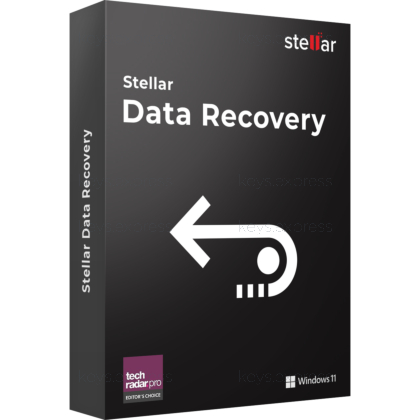
What are the main features and key advantages of Stellar Data Recovery 12?
Deep Scanning – Recovers files from deleted, formatted, or corrupted drives.
Partition Recovery – Restores data from lost or missing partitions.
File Preview – Lets you check recoverable files before saving.
Broad Support – Handles documents, photos, videos, emails, and archives.
Flexible Recovery – Works with HDDs, SSDs, USB drives, and cards.
Digital Reliability – Supports long-term data access and recovery readiness.
Download: Stellar Data Recovery 12
200+ file types – Recovers documents, photos, videos, audio, and archives.
Deep Scan engine – Locates data after formatting, deletion, or corruption.
BitLocker recovery – Restores files from encrypted Windows drives.
Photo & video repair – Fixes corrupt media in Premium edition.
Performance Metric – Deep Scans run up to 40% faster.
Important – Commercial use rights require the Technician edition.
Stellar Data Recovery 12 is a do-it-yourself Windows suite that restores lost, deleted, and formatted files from hard drives, SSDs, USB media, SD cards, and supported NAS units. Higher editions extend this with disk imaging, drive-health monitoring, RAID reconstruction, and corrupt photo and video repair.
No expertise needed – Guided scan, preview, and recovery in steps.
Preview before saving – Verify recoverable files before you restore them.
Faster Deep Scans – Version 12 shortens long scan times.
NAS recovery – Supports QNAP and ASUSTOR network storage.
Resume scans – Save scan results and continue them later.
Drive health monitor – SMART alerts flag disks before failure.
Stellar Data Recovery 12 is a Windows recovery tool that restores files lost to deletion, formatting, corruption, or partition damage. It scans more than 200 file types, including Office documents, PST email files, photos, videos, and ZIP/RAR archives, and lets you preview results before saving anything. The version 12 engine adds up to 40% faster Deep Scans and new recovery support for QNAP and ASUSTOR NAS devices. It works across NTFS, exFAT, FAT32, and 4K-sector drives, and can recover individual files larger than 4 GB while preserving the original folder structure.
The editions differ mainly by how deep the recovery reaches. Standard handles deleted and formatted file recovery from common Windows drives; Professional adds lost-partition recovery, disk imaging, unbootable-system recovery, and drive-health monitoring; and Premium layers on corrupt photo and video repair. Technician is the only edition with RAID 0, 5, and 6 reconstruction and commercial deployment rights. Match the edition to the failure you face: a single deleted folder needs only Standard, while a failed RAID array requires Technician.
| Feature | Standard | Professional | Premium | Technician |
|---|---|---|---|---|
| Deleted file recovery | ✓ | ✓ | ✓ | ✓ |
| Lost partition recovery | ✕ | ✓ | ✓ | ✓ |
| Disk imaging | ✕ | ✓ | ✓ | ✓ |
| Drive health monitor | ✕ | ✓ | ✓ | ✓ |
| Photo & video repair | ✕ | ✕ | ✓ | ✓ |
| RAID recovery | ✕ | ✕ | ✕ | ✓ |
| Commercial use | ✕ | ✕ | ✕ | ✓ |
It recovers from BitLocker-encrypted Windows drives, but RAID array recovery is limited to the Technician edition and higher, which rebuilds RAID 0, 5, and 6 volumes without the original controller card. The software does not recover data directly from iOS or Android phones; it targets computer drives, SSDs, USB media, SD cards, and supported NAS units. Photo and video repair is also absent from Standard and Professional and begins only at the Premium edition. Confirm your storage type and failure scenario against the right edition first, because a lower tier will not open a RAID set or repair corrupt footage.
Yes, but only in the Premium edition and above, which include built-in modules for repairing damaged photos and corrupt or unplayable videos. The video module rebuilds severely corrupt 4K UHD footage and handles formats such as MP4, MOV, MKV, AVI, AVCHD, MTS, and WEBM, including the SOWT and TWOS codec combinations added in version 12. This matters when a memory card or camera write fails mid-recording and the clip no longer opens. If you only need to retrieve existing files rather than fix broken ones, Standard or Professional covers that and the repair tools are unnecessary.
Check three things: the storage type, the kind of data loss, and whether commercial use is required. Recovery covers Windows computer storage, external drives, SD cards, and supported NAS, but not mobile phones, so phone data needs a different tool. If the work is for clients or a business, only the Technician edition grants commercial deployment rights, while the lower editions are licensed for personal use on a single system. Also decide whether you need photo and video repair, since that capability appears only from the Premium edition upward.
Yes. The Free edition scans and previews recoverable files and lets you recover up to 1 GB of data, which is enough to confirm whether your lost files are still retrievable before moving to a paid edition.
The Windows Toolkit edition can read and recover from Mac (HFS, HFS+, APFS) and Linux (ext2, ext3, ext4) file systems, while the standard Windows editions focus on NTFS, exFAT, and FAT volumes. For routine Windows recovery the lower editions are sufficient; the Toolkit matters mainly in mixed-platform environments.
The Professional edition and higher can recover files from scratched or partially burned CDs and DVDs, in addition to hard drives, SSDs, USB sticks, and flash media. The Standard edition does not include optical media recovery.
| Operating Systems | Windows 11: Home / Pro / Education / Enterprise Windows 10: Home / Pro / Pro Education / Pro for Workstations / Education / Enterprise Windows Server 2022: Essentials / Standard / Datacenter Windows Server 2019: Essentials / Standard / Datacenter Windows Server 2016: Essentials / Standard / Datacenter |
| Processor | Intel compatible x64-based processor |
| Memory RAM | 4 GB minimum. 8 GB recommended. |
| Hard Disk | 13.3 MB installer size |
| Display | Standard display compatible with the respective operating system |
| Special Features | BitLocker encrypted drive recovery. Lost partition recovery. RAW drive recovery. Bootable recovery drive for crashed or non-booting Windows systems. 4K drive recovery. Optical media recovery for CD, DVD, HD DVD, and Blu-ray discs. Disk imaging and drive cloning. Pause and resume scan with preview during scan. |
| Note | Internet connection required for activation. USB flash drive of 8 GB or more required only for Create Recovery Drive feature. BitLocker password required for encrypted drive recovery. |
| Operating Systems | macOS Tahoe 26 macOS Sequoia 15 macOS Sonoma 14 macOS Ventura 13 macOS Monterey 12 macOS Big Sur 11 macOS Catalina 10.15 macOS Mojave 10.14 macOS High Sierra 10.13 |
| Processor | 64-bit CPU. Compatible with Apple silicon M1, M2, M3, and M4 chips. Compatible with earlier Mac systems with T2 security chips. |
| Memory RAM | 4 GB minimum. 8 GB recommended. |
| Hard Disk | 43.7 MB installer size. |
| Display | Standard display compatible with the respective operating system. |
| Special Features | Recovery of permanently deleted files. Recovery from crashed or non-booting Mac systems. Time Machine recovery. BootCamp partition recovery. Recovery from formatted APFS, HFS+, NTFS, and ExFAT volumes. Encrypted drive recovery. Pause and resume scan with preview during scan. Recovery mode support without requiring an external boot device. |
| Note | Grant Full Disk Access. Allow Stellar Data Recovery extension. Password or recovery key required for encrypted APFS or FileVault volumes. Internet connection required for activation. |